Amasis: Between Ancient Art, Territory, and Contemporary Identity
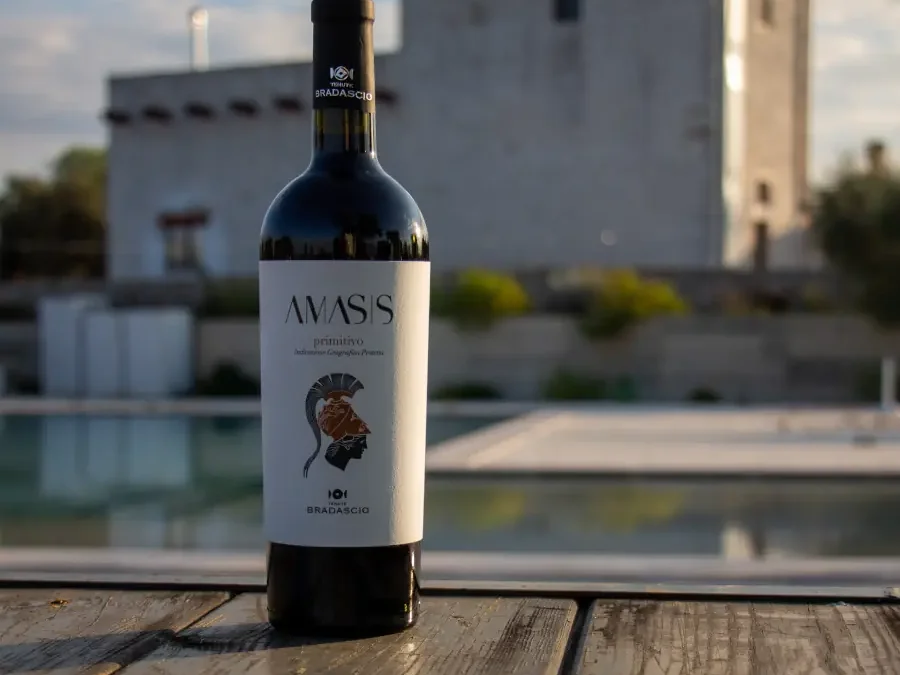
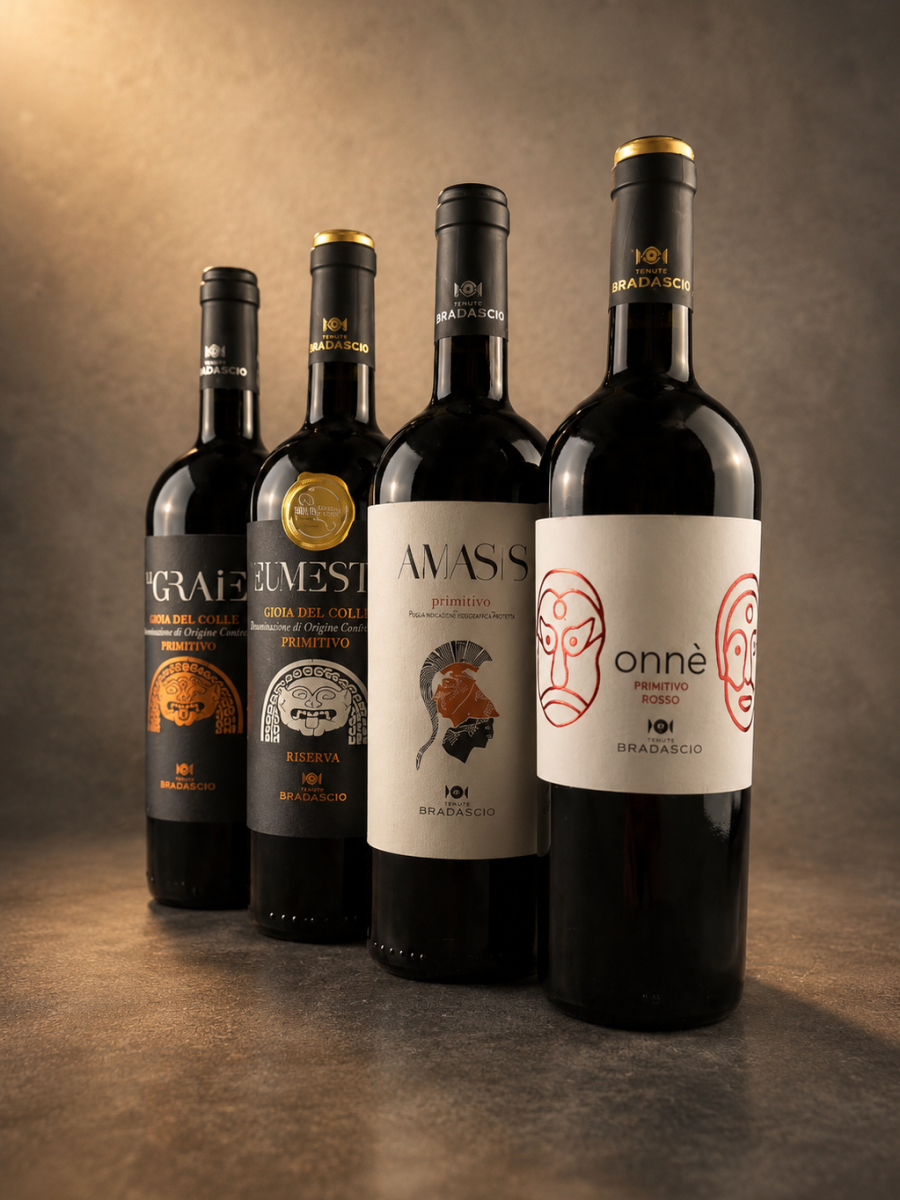
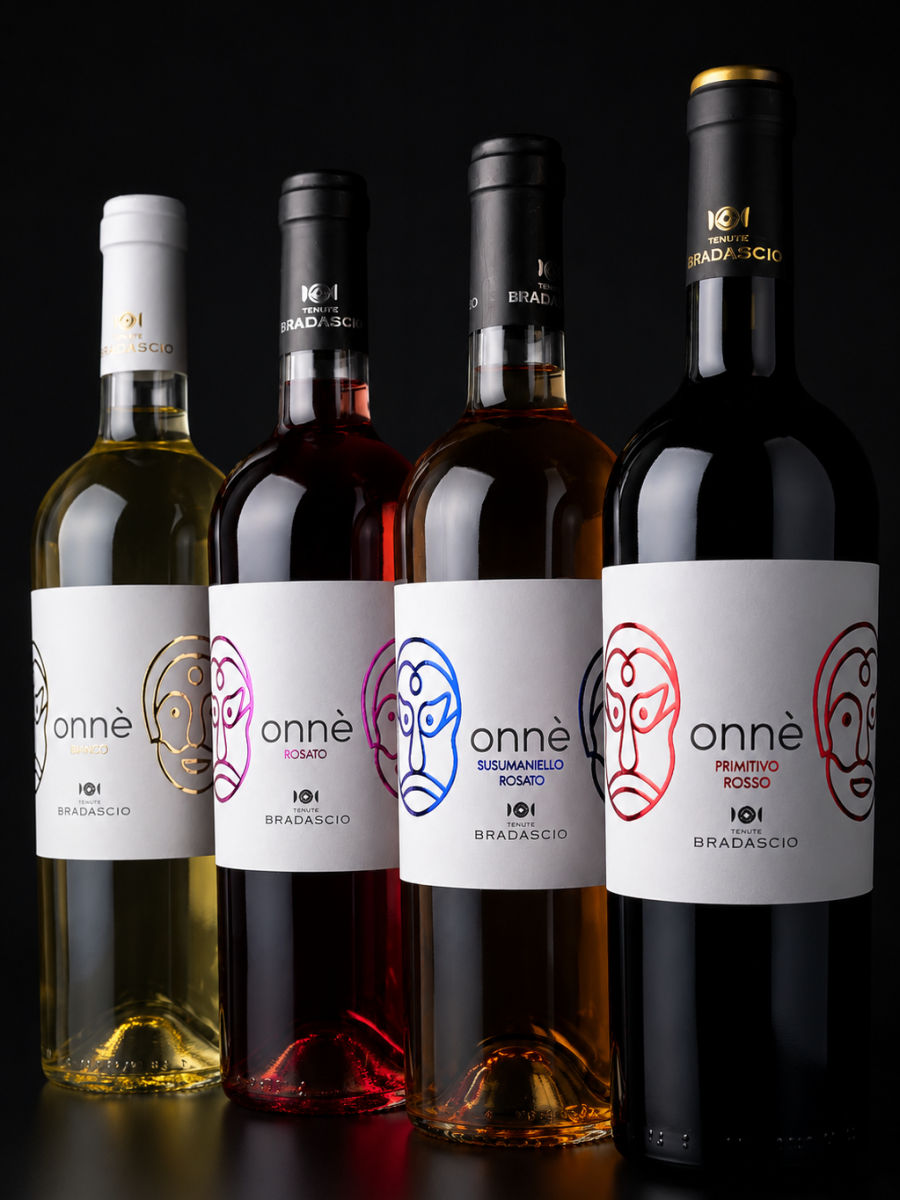
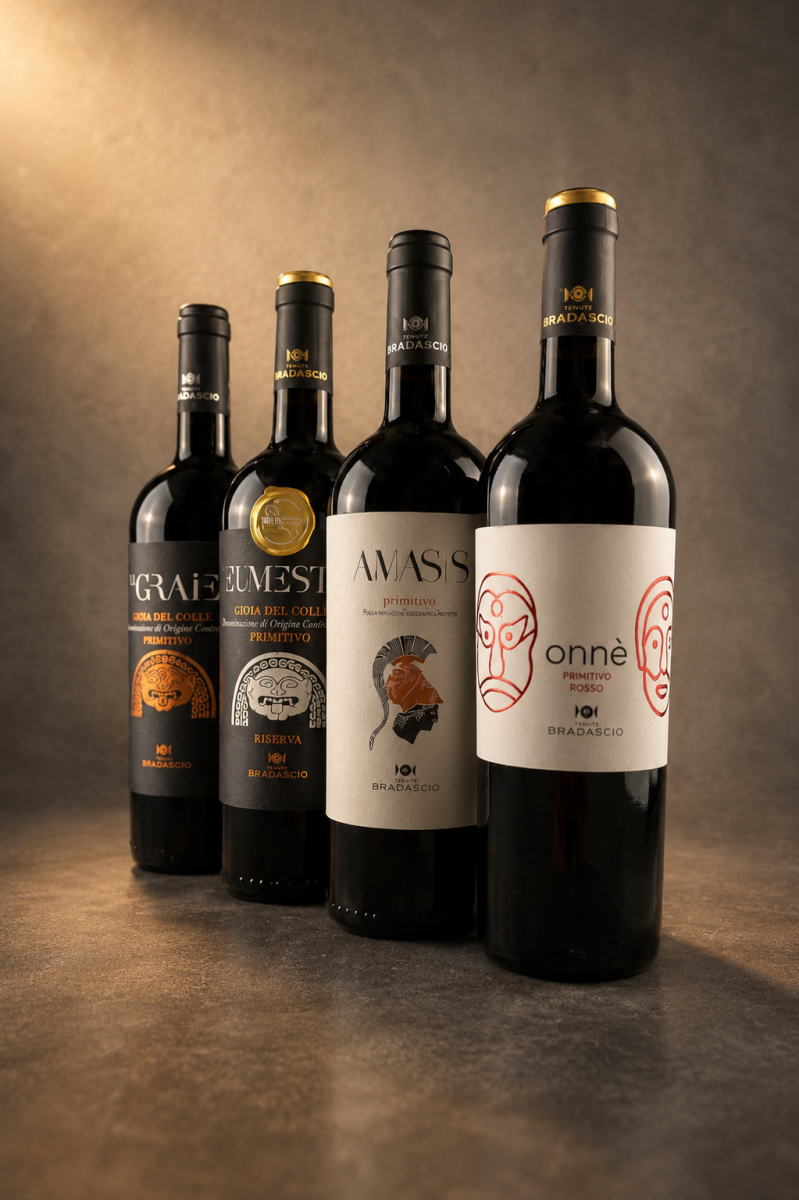
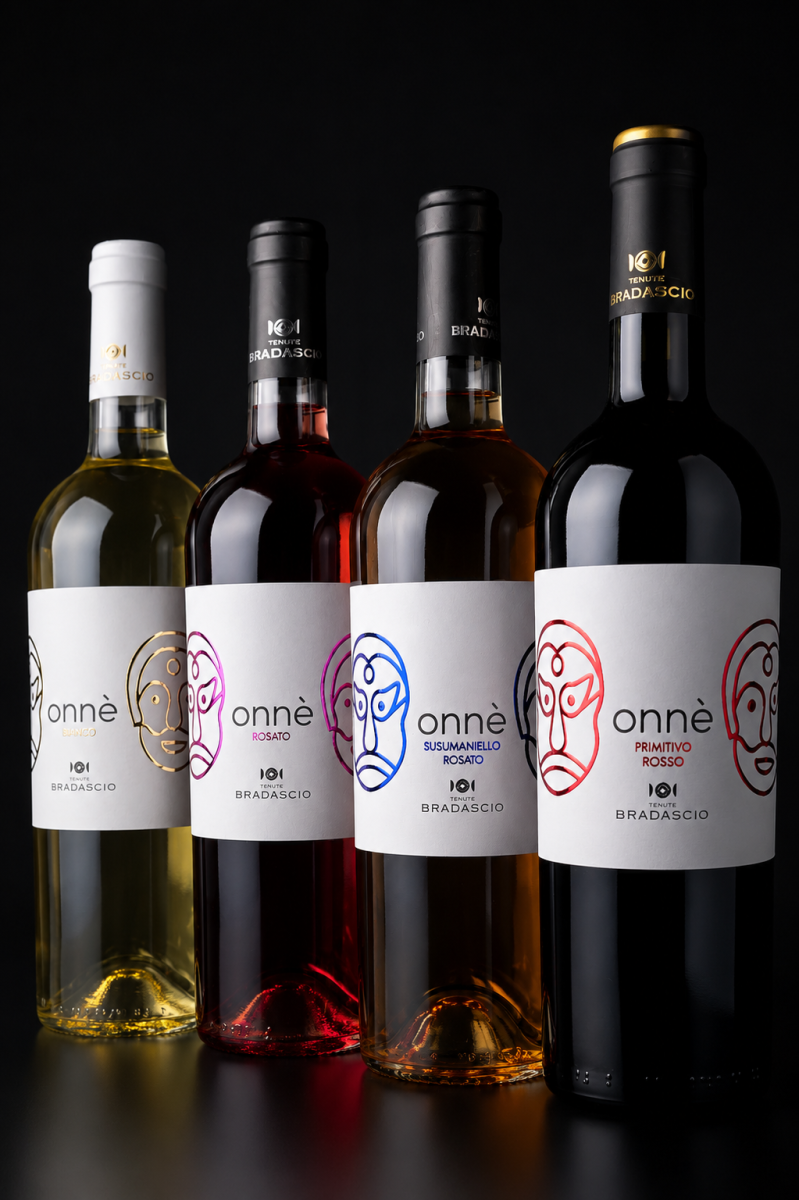
Amasis Tenute Bradascio is a line of wines that combines ancient art, territorial identity, and a contemporary interpretation of wine.
The Meaning of the Name Amasis
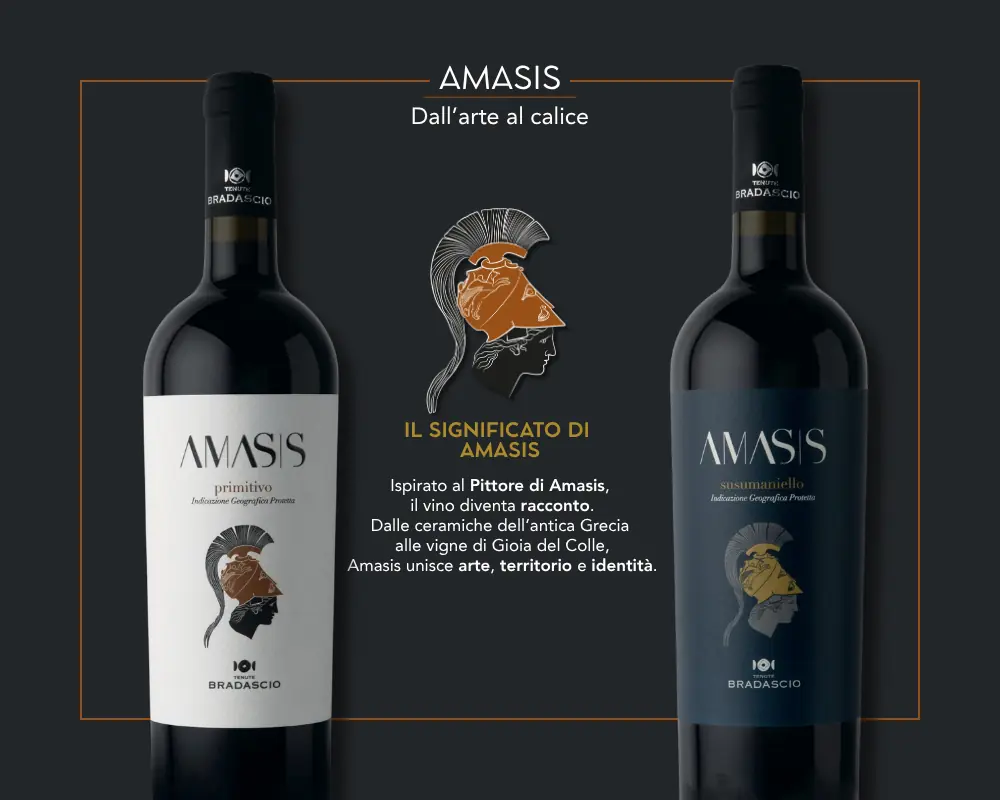
The name Amasis was not chosen by chance. It refers to the Amasis Painter, one of the most important vase painters of ancient Greece, active in Athens during the 6th century BC.
His works, created on amphorae and vases, depict scenes of daily life, rituals, and moments of conviviality, often linked to wine. His style is distinguished by balance, precision, and attention to detail.
This is not merely a historical reference, but a callback to a vision of wine as a cultural element, capable of narrating the relationship between man, land, and community.
The Link Between Art and Wine
In Greek culture, wine was not just a beverage, but an integral part of social and symbolic life. The ceramics of the Amasis Painter often depict moments of sharing, ritual, and relationship. In this context, wine becomes language, gesture, and storytelling.
Amasis, as a label, fits into this vision: not just a product, but a contemporary interpretation of a cultural heritage.
Gioia del Colle and the Memory of Wine
This link between art and wine finds continuity in the territory of Gioia del Colle.
Inside the Castello Normanno-Svevo, il museo archeologico custodisce reperti della civiltà peucezia, the archaeological museum houses artifacts from the Peucetian civilization, including ceramics and evidence related to daily life and ancient rituals. Contributing to this bond with the past is the Archaeological Park of Monte Sannace, one of the most significant sites for understanding Peucetian civilization in the region.
Objects, places, and testimonies tell of a profound relationship with the land and with wine.
In this context, wine returns to being a cultural expression, not just a product—a thread that unites the representations of antiquity with the agricultural practices and viticultural traditions that still characterize this territory today.
Amasis: Two Expressions, One Identity
Within the Tenute Bradascio line, Amasis is presented in two variants, both rooted in the Apulian territory.
Amasis Primitivo IGP Puglia
A wine with an immediate and recognizable profile, characterized by:
- notes of strawberry, cherry, and wild berries
- balanced structure
- drinkability and aromatic cleanliness
It is a Primitivo that focuses on harmony while maintaining a strong territorial identity.
Consult the wine technical sheet
Amasis Susumaniello
A more intense and complex reading:
- notes of ripe berries
- hints of coffee, chocolate, and vanilla
- enveloping structure
The Susumaniello represents another expression of the territory, capable of offering a deeper and spicier dimension alongside the Primitivo.
Consult the wine technical sheet
A Wine that Dialogues with HistoryChoosing the name Amasis means placing the wine within a broader narrative. Just as the Amasis Painter told the story of his time through images, Tenute Bradascio interprets the present through wine, maintaining a link with history and the cultural significance of production.
Every bottle becomes a meeting point between:
- contemporary interpretation
- memory
- territory
Amasis and Tenute Bradascio
Amasis represents one of the most direct expressions of the Tenute Bradascio philosophy. A wine that does not seek excess, but balance and recognizability, in line with a vision that centers on:
- territorial identity
- production consistency
- valorization of the grape variety
In both its versions, Amasis tells of a clear approach: wine as a synthesis between culture and territory.